Legacy Stories
Writing a Memoir Together: How Couples and Siblings Share One Book
Writing a memoir together? See how couples and siblings share one book, with credits for who told each chapter and questions from the whole family.
Kindred Tales Editorial
Editorial team

Two people can live the same forty years and come away with two different stories about them.
If you're thinking about writing a memoir together, this guide walks through how that works in a Kindred Tales book, where co-authors get credit by name and the rest of the family can send questions without signing up for anything.
Two ways to share one book
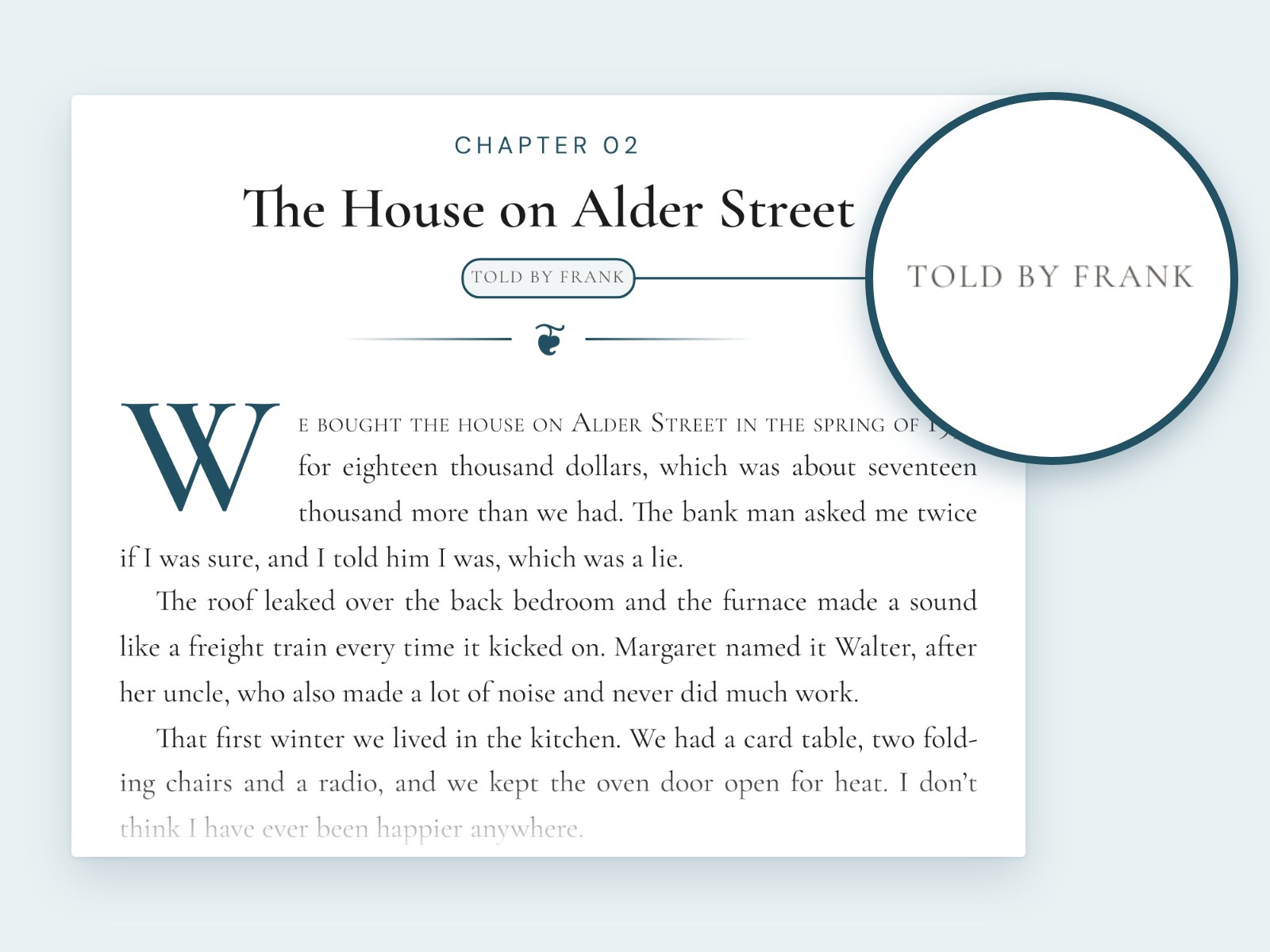
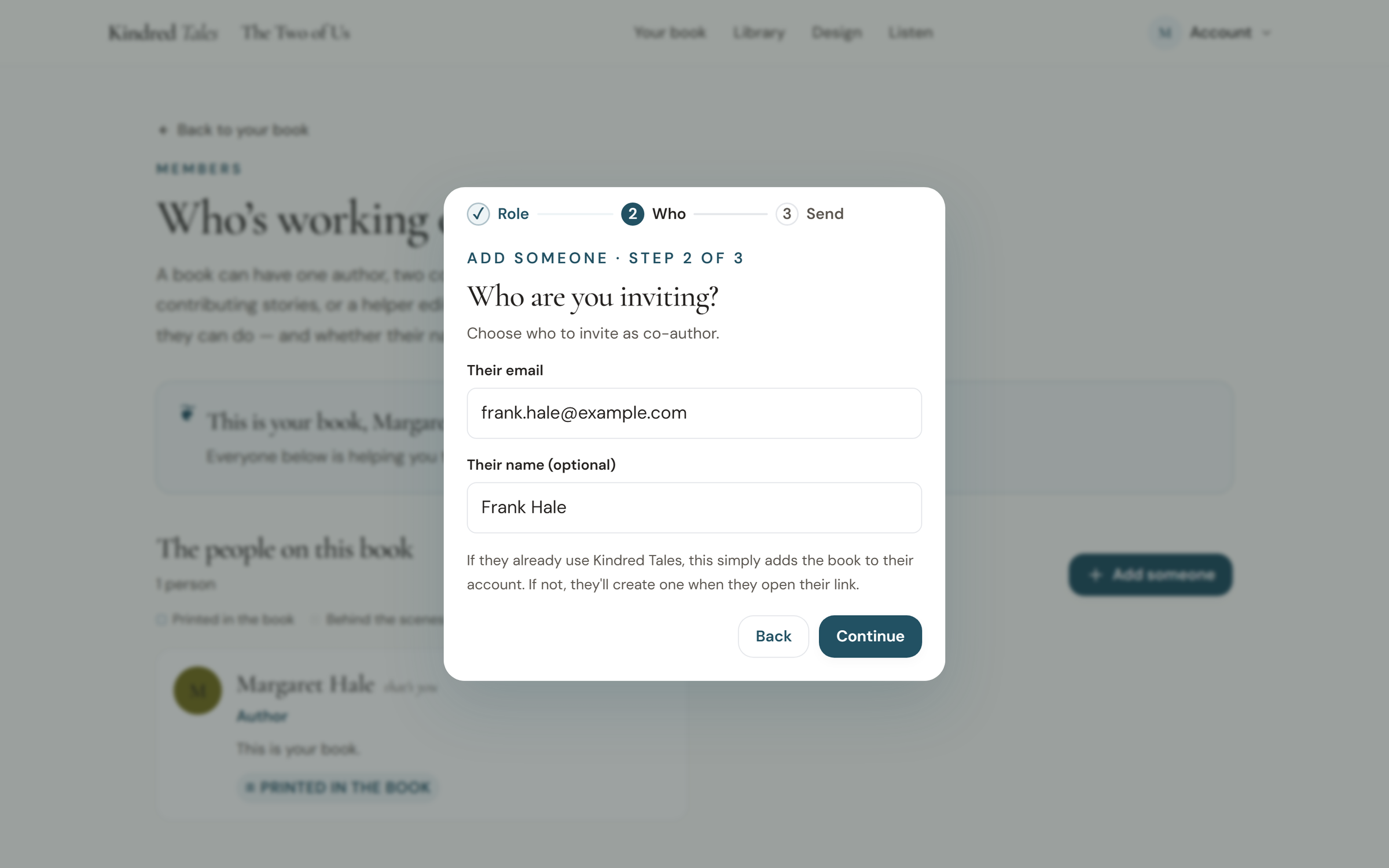
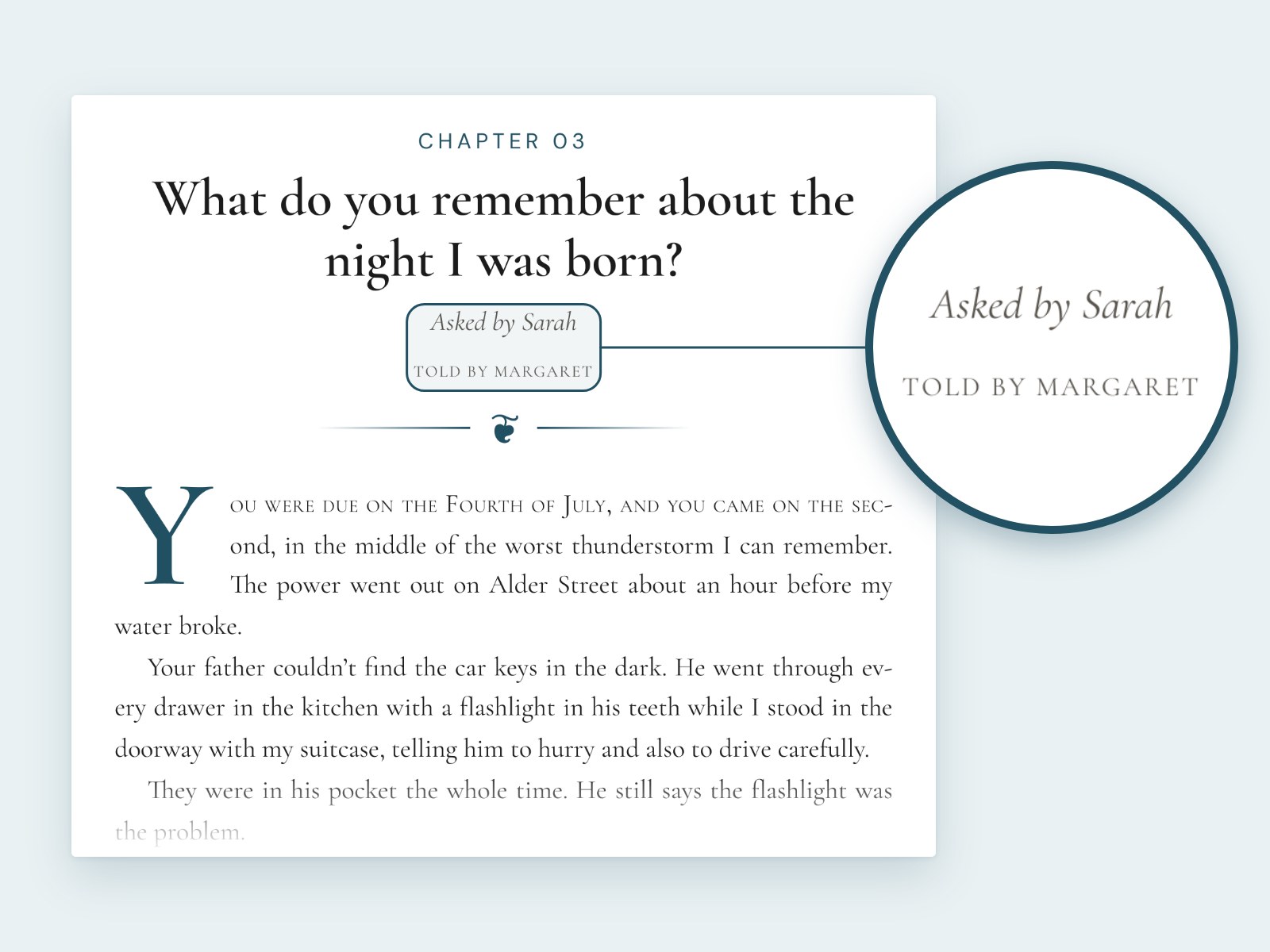
The first way is to write in the book itself as a co-author. The person who sets up the book can invite co-authors, such as a spouse or a sibling. Each chapter can then print a Told by line naming who told it, so a reader years from now knows whose voice they are hearing.
The second way suits people who would rather ask than write. Relatives who are not on the book can send the author questions through a private link, with no account needed. When an answer goes in the book, the printed chapter can credit who asked it.
A couple usually fits the first way, because both of you lived the story and both of you have chapters to tell. Siblings giving a book to a parent often fit the second, since your mom or dad is the star and you mostly want your questions in the mix. Plenty of families mix the two. You can see more about choosing a book for a parent on our memory books for parents page.
Writing your life together as a couple
A shared life still has parts only one of you can tell. Your childhood happened before you met, and so did your partner's. Those make natural solo chapters, each printed with its own Told by line.
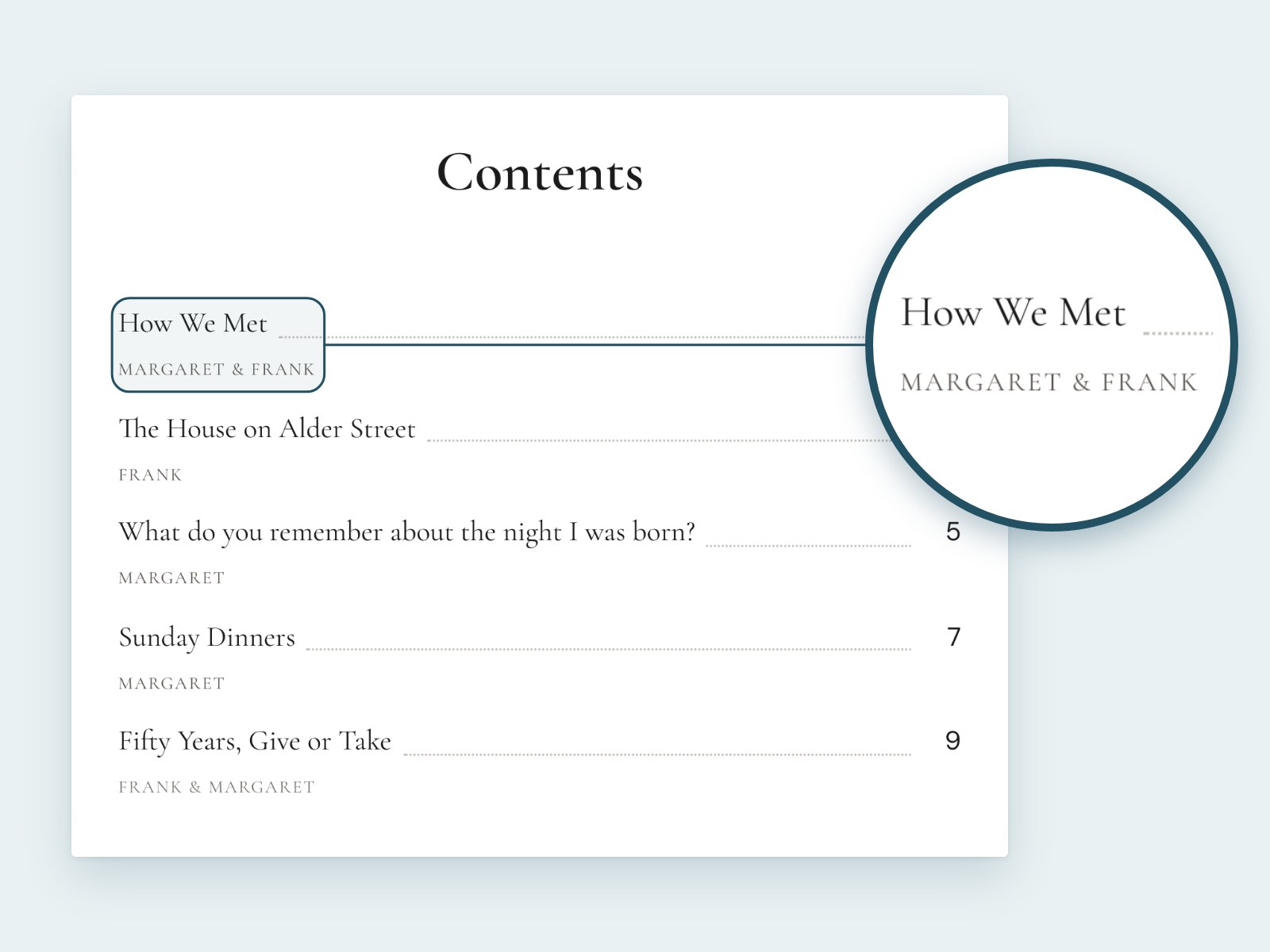
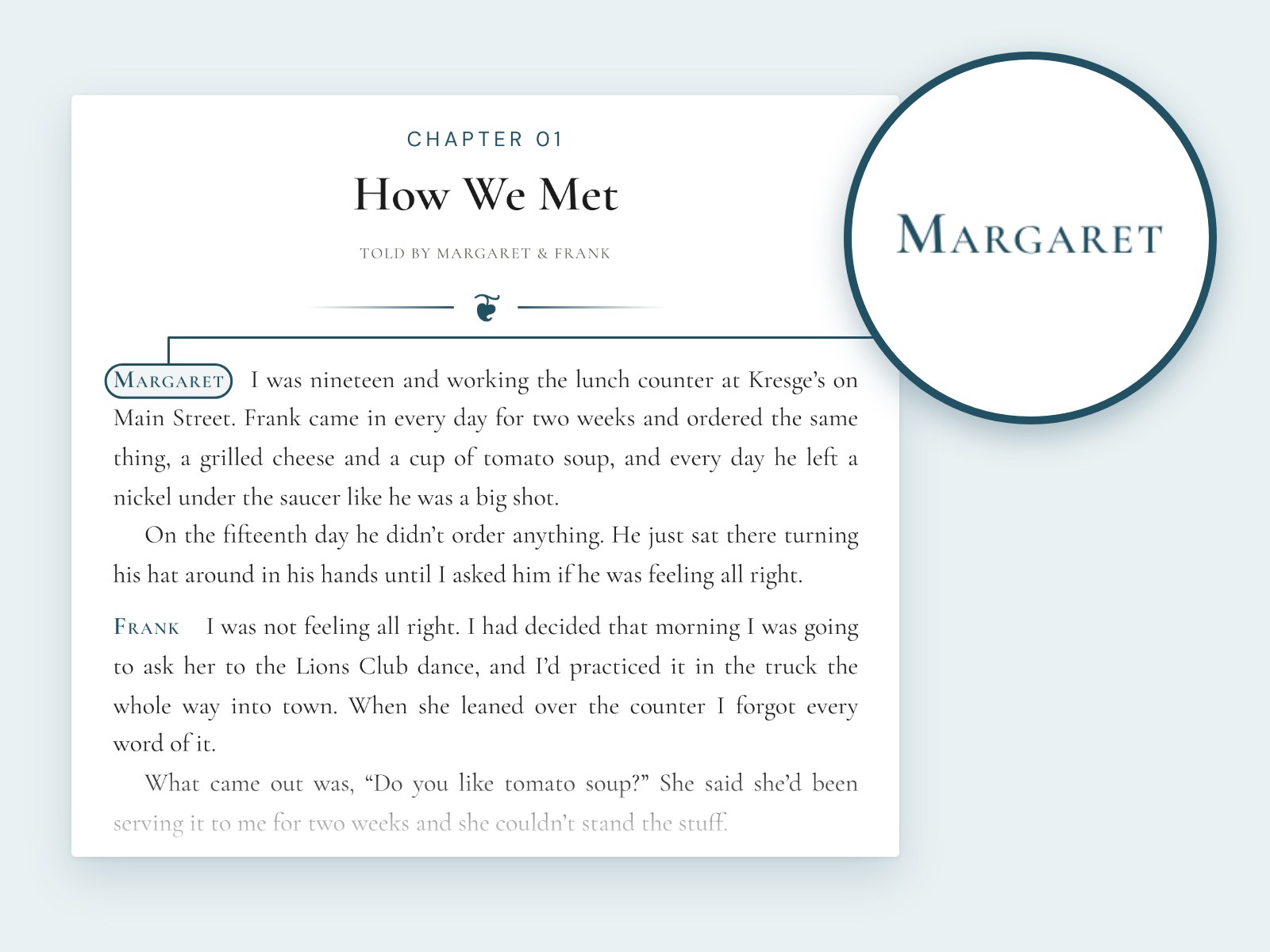
Then there are the years you lived side by side. For those, you can tell a chapter together. When two voices share a chapter, paragraphs can carry each speaker's name, so the book reads a little like a conversation on paper. Both of you are named in the table of contents, which means nobody ends up as a footnote in their own marriage.
A simple way to start
- One of you sets up the book and invites the other as a co-author.
- Sketch which chapters belong to each of you alone, such as your early years.
- Mark the chapters you want to tell together, such as how you met or a move you made as a couple.
- For shared chapters, take turns by paragraph so each part carries the right name.
Siblings and a parent's story
When the book is about your mom or dad, they stay the main storyteller. That is the whole point of the gift. Still, there may be a chapter only a brother or sister can tell, like the year one of you lived near your parent while the others were far away. In that case, the person who set up the book can invite that sibling as a co-author for those chapters, and each one prints with its own Told by line.
The other set-up keeps the siblings out of the writing entirely. Each of you sends questions to your parent through the private link, and no account is needed. If your parent answers one in the book, the chapter can say who asked. If you are stuck on what to ask, our list of questions to ask your siblings about your parents is a good place to compare notes first.
Setting it up so nobody gets buried in prompts
The person who sets up the book invites the co-authors, so one of you takes the lead. After that, the book has one weekly question stream shared by its authors. That means prompts never arrive twice, once for each of you, which is a relief if your inbox is already full.
Because the questions are shared, it helps to agree early on who answers what. A quick call or a group text is plenty.
When you remember it differently
Ask two people about the same day and you will often get two versions. One remembers the rain, the other remembers the argument about directions. That is ordinary, and it is often the most interesting part of the story.
You do not have to pick a winner. In a shared chapter, paragraphs can carry each speaker's name, so both versions sit side by side, each under the person who told it. Or each of you can tell the day in your own chapter with its own Told by line. Either way, the reader gets both, and nobody has to decide whose memory counts.
Questions from the rest of the family
Aunts, cousins and grandchildren often have one question they have always wanted to ask. They do not need to join the book or make an account. Share the private link, and they can send the author a question.
If the answer goes in the book, the printed chapter can credit the person who asked, for example Asked by Aunt Ruth. One thing to set straight with relatives: people who ask cannot read the answers in the app. So tell them up front that the answer lives in the printed book.
How other services handle more than one storyteller
Other memoir services have their own ways of bringing family in, and each is clear about how it works. The details below come from their own pages, checked November 2026.
Remento's FAQ says it is designed for one storyteller per book, and it lets family members contribute questions and vote on future prompts, which is a nice way to get everyone involved. Its help article on inviting others says invitees need to create their own free account to take part.
Storyworth's FAQ says each subscription covers one storyteller and one book. It also says two storytellers' stories can be combined into one book by contacting support after they finish. Its sharing help page adds that people on the sharing list can pick questions for the storyteller, which gives other family members a way to shape what gets asked.
For a longer side by side, see our Kindred Tales vs Remento comparison and our three-way comparison, along with what sets Kindred Tales apart from other memoir services and our roundup of Storyworth alternatives.
Common questions
Writing a memoir together: common questions
Can two people write one book?
Does the printed book show who told what?
Do relatives need an account to send a question?
Is Ali needed?
Keep reading

Legacy Stories
How Memory Books Preserve Family Legacies: A Kindred Tales Guide
Discover how memory books preserve family legacies. Learn to create personalized keepsake books with Kindred Tales and keep your loved ones' life stories alive.

Legacy Stories
Preserve Your Life Story with Kindred Tales—Now in Both U.S. and British English
Capture your family’s unique story with Kindred Tales. Now offering U.S. and British English outputs, our AI Biographer helps you create life story books, family history books, and memoirs that preserve your legacy in the language that feels most authentic.

Legacy Stories
5 Famous Life Stories That Inspire and Why They Matter
Explore 5 famous life stories that continue to inspire readers worldwide. Discover why memoirs like Anne Frank's diary and Nelson Mandela's autobiography matter, and learn valuable lessons for writing your own life story.