Interview Tips
Questions to Ask Siblings About Your Parents and Childhood
What does each of you remember about Mom and Dad? Questions to ask siblings about your parents and growing up, plus a question game for the holiday table.
Kindred Tales Editorial
Editorial team
The best questions to ask siblings about your parents are the ones none of you can answer alone: how Mom and Dad met, why the family moved, what they were like before you were born, and what each of you saw that the others missed. Ask them when you're all under one roof, which for most families means the holidays. Your older brother remembers the apartment. Your younger sister remembers the years after you left home. Put the pieces side by side and you get a fuller picture of your parents than any one of you has.
This guide is about your parents and the house you grew up in. For questions about your relationship with each other, see our 25 questions to deepen an adult sibling bond.
What should you ask your siblings about your parents?
Good questions about your parents point at a place, a year or a habit. “What was Dad like?” gets a shrug. “What was Dad doing in the garage every Saturday?” can carry a whole evening. Swap in your own details. The street, the car, the job your mother went back to when the youngest started school: those are what get a real answer. The 24 below come in four groups and work for brothers and sisters alike. If a parent has died, or your parents split up, read the section on that further down first. Most of these questions still work, with a small change in wording.
Questions about your parents before you came along (1 to 6)
- What do you know about how Mom and Dad met, and who told you?
- What did Mom or Dad want to do with their life before we came along?
- Where did they live in their first years together, and why did they leave?
- Who were their friends back then, and what happened to them?
- Which story about our grandparents have you heard that I never did?
- What's one thing about their lives before us that still doesn't add up?
Questions to ask siblings about childhood memories (7 to 12)
- What did an ordinary weeknight dinner look like when you were small?
- Where did Mom or Dad go when they needed a minute to themselves?
- Which house rule did you think was unfair, and does it make sense to you now?
- What do you remember about money in our house, tight or not?
- What song, smell or dish takes you straight back to that kitchen?
- Which childhood holiday do you remember best, and what was Mom or Dad doing in it?
Questions only siblings together can answer (13 to 18)
These six are the reason to ask in person, with more than one of you there. Each sibling grew up with a slightly different Mom and Dad, so each answer adds something the others can't.
- What did Mom or Dad tell you that they never told me?
- What were they like in the years before I was born, or after I left home?
- What did you overhear as a kid that you only understood years later?
- Which family story do you tell differently from me, and whose version is closer?
- When did you first see Mom or Dad as a person, and not only as a parent?
- Which of us turned out most like Mom, and which of us most like Dad?
Questions to settle before you ask your parents (19 to 24)
- If each of us could ask Mom or Dad one thing, what would it be, and who should ask it?
- What don't we know about their parents, our grandparents?
- Which years of their lives do they never talk about?
- Who has the photos, letters and recipe cards, and has anyone read the backs?
- What do we want our own kids to know about them?
- Which of their stories do we most want written down?
How do you play a sibling question game at the holidays?
A question game for the holiday table works best when it's built around how differently each of you remembers the same house. We call this one Two Versions. It needs a bowl, some slips of paper and pens, and it suits Christmas, Thanksgiving or any night when the dishes are done and nobody wants to leave the table yet.
- Write questions 7 to 18 on slips of paper and fold them into a bowl. Leave out anything that could start an argument.
- One person draws a slip and reads it aloud.
- Every sibling writes a short answer on their own scrap of paper, without talking.
- Read the answers out one at a time and let the table guess who wrote which.
- No correcting. If two answers don't match, each of you tells your version in full. The mismatch is the fun of it.
- Anyone can pass on any question, no reason needed.
If Mom or Dad is at the table, give them the last word on each round. When your father says, “That's not why we moved,” put the bowl down and ask him why you did. Grandkids make good players too. A ten-year-old will ask the follow-up question that adults are too polite to ask.
Why do siblings remember Mom and Dad so differently?
Siblings remember their parents differently because each of them grew up in a different version of the family. The oldest got young, nervous parents and a small apartment. The youngest got parents who were tired, or more relaxed, or going through a divorce. One of you was home the year Dad lost his job, and one of you was away at school.
Psychologists Robert Plomin and Denise Daniels asked a question any sibling could ask: “Why are children in the same family so different from one another?” In their review, first published in 1987, they concluded that children in the same family end up different largely because of the experiences they don't share. They studied personality and abilities, not memory. Our own guess follows from it, though. If each of you lived a different version of the house, each of you will remember a different Mom and Dad.
So when your sister's story about the move to Ohio doesn't match yours, ask her what she saw. Both versions can be true.
What if a parent has died, or your parents split up?
Questions about a parent who has died can be some of the best conversations siblings ever have. The holidays are often when you miss them most, and it can be easier to talk about Mom than to avoid her name all evening. Change the tense and keep the questions. “What do you remember about Dad?” works as well as any question on this list.
- What's a story about Mom that you think the rest of us have forgotten?
- What did Dad say or do that you still catch yourself doing?
- What would you want to ask her now, if you could?
- Who outside the family knew him well, and should we ask them for their stories too?
If your parents divorced, ask about each parent on their own, and be ready for siblings to have different loyalties. One of you may have lived with Mom and one with Dad. Questions like “What was it like at Dad's on the weekends?” let each sibling describe their own house without anyone having to defend a side. Leave questions about why the marriage ended out of the holiday game. If someone wants to talk about it, they'll bring it up, and a quiet walk suits that conversation better than a full table. And if a parent caused real harm, nobody owes the family these questions. Let each sibling decide what they want to share.
What can you talk about with siblings at the holidays?
Not every conversation needs a question. Some of the easiest things to talk about with siblings at the holidays are objects and places, and the stories come with them.
- The house you grew up in, room by room. Draw a floor plan together on a napkin and see who remembers where the phone was.
- Mom's or Dad's sayings, the ones you still hear in your head.
- Every family car you can name, and the worst trip taken in each.
- Holiday food: who made it, and whether anyone has the recipe written down.
- Your parents' jobs, and what they said about work at dinner.
- Neighbors, family friends and the relatives everyone talked about in lowered voices.
Questions to ask your parents about their life
When you're ready to take your questions to Mom or Dad directly.
LegacyHonoring loved ones through personal stories
Ways to keep a parent's stories, including after they're gone.
Gift ideasA gift for parents who have everything
Ideas for the parent who says they don't need a thing.
What can siblings do with what they piece together?
Comparing notes usually ends with a list of things only Mom or Dad can answer. Write that list down before everyone drives home. Then decide who asks what. One sibling takes the early years, another takes the move, and the one who lives closest takes the questions best asked over coffee. Our guide to questions to ask your parents about their life has more to choose from.
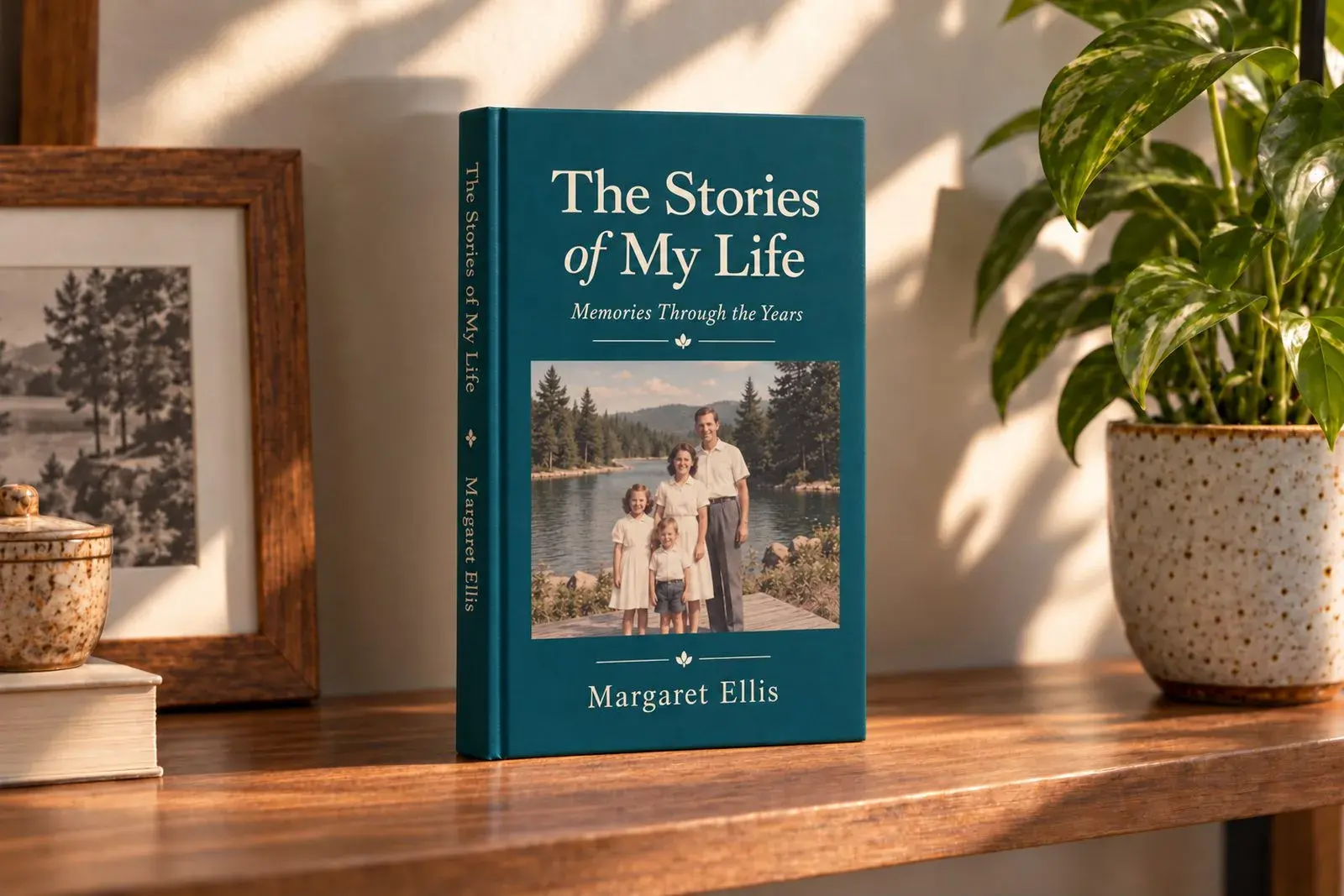
Some siblings go in together on a gift that does the asking for them. Kindred Tales, which we make, sends your parent a question every week for a year and prints their answers as a hardcover book. You can invite family to help and add your own questions, so the ones you came up with at the table can go straight in. Read more about life story books for parents.
Common questions
What should I ask my siblings about our parents?
What are good questions to ask siblings about childhood memories?
What are good questions to ask your brother or sister at Christmas?
What do siblings talk about at the holidays?
How do you talk with siblings about a parent who has died?
Going in on a gift for Mom or Dad?
Give your parent a question each week for a year, and a hardcover book of their answers at the end. Invite family to help, so every brother and sister has a part in it.
Begin their bookKeep reading
Interview Tips
Questions to Ask Your Parents About Their Life, and How to Ask
Questions to ask your parents about their life that open real stories, not one-line answers, plus how to ask and what to do when they deflect.

Interview Tips
Is Everyone a Writer? Exploring the Boundaries of Creativity in the Age of AI
Explore how AI is reshaping the definition of 'writer' in the digital age. From democratized access to enhanced creativity, discover where human craft meets artificial intelligence.

Interview Tips
The Ultimate Guide to Capturing Your Life Story: From Memories to Memoir
Discover how to write your life story with our comprehensive guide. Learn why your story matters, how to get started, choose between memoir and autobiography formats, organize your memories, and use compelling writing techniques. Start preserving your legacy today!