Gift Guidance
Gift for Parents Who Have Everything: 7 Ideas Beyond More Stuff
Your parents say they don't need anything, and they mean it. Seven Christmas and birthday gift ideas beyond more stuff, and how to choose the right one.
Kindred Tales Editorial
Editorial team
The best gift for parents who have everything isn't a thing. It's your time, or a reason for them to talk about their own life with someone who's really listening. When they say "we don't need anything," believe them, and give them a day, a chore taken off their hands, or a record of their story.
The seven ideas, a line each. The details come further down.
- Time together, on the calendar. Real dates in a card, not "let's get together more."
- Labeling old photos, together. An afternoon putting names back on the faces.
- A recorded conversation. Your phone and one good opening question.
- A trip back. The street they grew up on, with them leading the way.
- A chore taken over. The job they dread, handed to you for good.
- A class, or a lesson from them. Learn something new side by side, or have them teach you what they know.
- A life-story book. A year of questions about their life, with a book of their answers at the end.
Why is it so hard to buy for parents who have everything?
Not for lack of ideas. Search the phrase and you'll find hundreds of them. Monogrammed cheese boards. A digital photo frame that comes with its own setup instructions. Most of it is more stuff, offered to people who already own more than they need.
By their 70s or 80s, many parents have a full house. A 2014 study in the Journals of Gerontology found that most Americans over 50 say they own more things than they need. Yet people get less likely to clear things out as they age. The survey data date from 2010. A new gadget is one more thing to find a place for, and one more thing to feel guilty about giving away.
What a gift can add is someone asking about their life. Ask what their first apartment looked like, or how they knew they wanted to marry the person they married.
There is some research on the side of experiences. In a 2017 study in the Journal of Consumer Research, people who received an experience as a gift felt closer to the giver afterward than people who received an object. That held even when they used the gift without the giver. Most of the people in those experiments were younger adults, so take it as a good sign for your parents, not proof.
How do you choose a gift for a parent who has everything?
Say your father has asked for "nothing, really" five Christmases running. You could read that as a closed door. Or you could read it as information. He's telling you what he doesn't want, which is more to dust.
Five minutes on these questions will cross off most of the ideas below, which is what you want. They work just as well for a grandparent or an 80th birthday.
Six questions before you buy
- What do they complain about? A chore they dread, or a job around the house they keep putting off. Taking a burden away is a gift.
- What do they light up talking about? A place, a decade, an old job, a person they miss. Start there.
- Would they rather do something with you, or have something from you? Some parents want your company more than anything you could wrap.
- How do they feel about talking about themselves? Some love it. Some would rather reshingle the roof. Be honest with yourself here.
- What is their energy like right now? A road trip suits a parent who still drives to the lake every summer. An afternoon at the kitchen table suits one who tires easily.
- Who else could be in on it? Siblings and grandchildren can share the planning and the cost.
What are good gifts for parents who have everything?
Here are seven that won't end up in a closet. None of them is new. What makes them work is fit, so each one comes with who it suits and one practical tip. If you want more ideas for people over 60, we keep a longer list.
Time together, on the calendar
Suits: the parent who says "we just want to see you."
They mean it. The trouble is that "let's get together more" is a wish, and wishes lose to busy months. "The second Sunday of every month, I'm bringing lunch" is a gift. If you have siblings nearby, take turns on the monthly date, so it holds even in the months you can't make it.
Tip: write the dates in the card. A parent can look forward to a date. A vague intention gives them nothing to look forward to.
Labeling old photos, together
Suits: the parent with shoeboxes of pictures nobody has sorted since the 1980s.
The photos themselves survive. What gets lost is who is in them. An afternoon going through a box together turns anonymous faces back into Aunt Ruth and the neighbor who taught your dad to fish.
Tip: bring a pencil and a pack of sticky notes, and label as you go. If their eyesight isn't what it was, split the work. You hold the photo up and write. They just name the faces. Scanning can come later. The names are the part worth getting first.
A recorded conversation
Suits: the grandpa who tells great stories, and anyone who would rather talk than write.
You don't need equipment. The voice recorder on your phone and one good opening question will do. Then mostly listen. The most useful follow-up question in the world is "what happened next?"
Tip: our guide to recording your parents' stories covers asking permission and keeping their words, and the same article has plenty of opening questions.
A trip back to a place from their past
Suits: a parent who can still travel, even if only for a day.
The street they grew up on, or the church where they married. Standing in the place itself can bring back details that never come up on the couch.
Tip: let them lead, and at every stop ask "what used to be here?" Take photos of them there, not just of the buildings.
Taking over a chore they dread
Suits: the parent with a job that has gotten harder than it used to be, who won't ask for help. Gutters, tax forms, the winter driveway, the yearly argument with the phone company.
Tip: make it ongoing and specific. "I'll do your taxes every spring from now on" is worth far more than a single afternoon of help.
A class together, or a lesson from them
Suits: the curious parent who still likes learning things. Pottery, bread baking, a guided bird walk, conversational Italian.
Or turn it around and have them teach you the thing they're good at, the pie crust or the dovetail joint. You get the skill. They get a student who wants to know how they learned it.
Tip: if you book a class, pick something neither of you is good at. Being beginners together is the point, and it puts you on equal footing in a way that doesn't often happen between parents and grown children.

A life-story book
This is what we make, so read this one knowing that. We'll be straight about who it suits and who it doesn't.
Kindred Tales is a year of weekly questions, and a hardcover book at the end. A question arrives each week by email. They can reply to the email, and their answer becomes a chapter. They can also write online. Photos go right where they belong in the story, and the finished book is a 6 by 9 inch hardcover with a matte cover.
If money is tight, several of the other ideas on this list cost little or nothing but time.
Suits: the parent who lights up telling stories, or has said "someone should write this down" more than once. Hate writing? They can press record and talk. We turn it into text. What they get is a year of questions about their life, some of them written by you.
Doesn't suit: a parent who truly dislikes talking about themselves, or who would feel a weekly question as homework. There's no quota. Three sentences a week counts. But if the idea itself makes them wince, choose something else on this list. A gift they dread is not a gift.
It also doesn't suit a parent who doesn't use email, unless someone will sit with them each week. That someone doesn't have to be you. You can invite family to help, so a grandchild or a sibling can open the question with them and press record.
Tip: you can write your own questions, or edit ours. A question only you would know to ask tells them you were paying attention. You can give it as a gift, then hand over a card you wrote yourself that explains it. Put the gift code inside, with a line about why you chose it.
Giving it from all of you? One of you gives it, and everyone else can send that person questions to add. Sign the card "from all of us."
What do you get a grandpa who tells great stories?
Give him an audience and a way to keep the stories. Sit down with him with your phone recording, and ask "what happened next?" every time he pauses. Bring a grandchild along, since a new listener often gets the long version. Then decide how to keep what he tells you: recordings labeled and saved where the family can find them, or his stories written up in his own words.
The life-story gift guide
How a year of questions works as a gift, from choosing it to the finished book.
Gift guidanceWhy a life-story book works as a gift
A closer look at what the year of questions is like for the person answering.
What is a good Christmas gift for parents who have everything?
The same ideas work under a tree, as long as there's something to hand over on the day. A few that give well at Christmas:
- A year of monthly lunches, with all twelve dates written in the card.
- A chore, taken over for good. "Starting in January, the tax forms are mine."
- A spring trip back to the street they grew up on, with the day already picked.
- A lesson where they teach you the family pie crust, booked for a quiet week in January.
Every one of these is a promise, and a promise has one weakness under the tree. There's nothing much to unwrap. Next to a sweater and a box of chocolates it can look like an afterthought, and a parent who isn't sure what it is may quietly set it aside.
How do you give an experience gift so it lands?
The card does the work. Your own words matter more here than any wrapping, and that holds for all seven ideas, from a promised trip to a story gift. A few things to put in it:
- What it is, in one plain sentence. "Lunch at your place, the second Sunday of every month."
- Why you chose it for them. Name the story you've always wanted to hear properly, or the place you want to see with them.
- What the first time will look like. Where you'll go and what you'll bring.
- That you'll be there. Offer to come for the first one. Starting can be the hardest part, and company helps.
- That it bends around them. A missed month isn't a failure. For a story gift, say it plainly. Answer the ones you like, skip the ones you don't. Write as much or as little as you like.
Timing helps too. The middle of a loud gift exchange is a hard moment to explain anything. If you can, give it on a quieter evening after the big day. That goes for Hanukkah as much as Christmas.
Here's a card for a story gift you could adapt.
Questions people ask about gifts for parents who have everything
What do you give a parent who says they don't want anything?
What's a good 80th birthday gift for someone who has everything?
What is a good sentimental gift for aging parents?
What if one parent has recently died, or my parents are divorced?
What's a good last-minute Christmas gift for parents who have everything?
Give them a year of questions about their life
A year of weekly questions, and a hardcover book at the end. They can reply to the email, or press record and talk.
Start their storyKeep reading

Gift Guidance
25 Thoughtful Gifts for Loved Ones Over 60 (2025 Guide)
Discover 25 meaningful gifts for loved ones over 60 in 2025. From Kindred Tales our #1 pick for preserving family stories to comfort essentials they'll actually use.
Gift Guidance
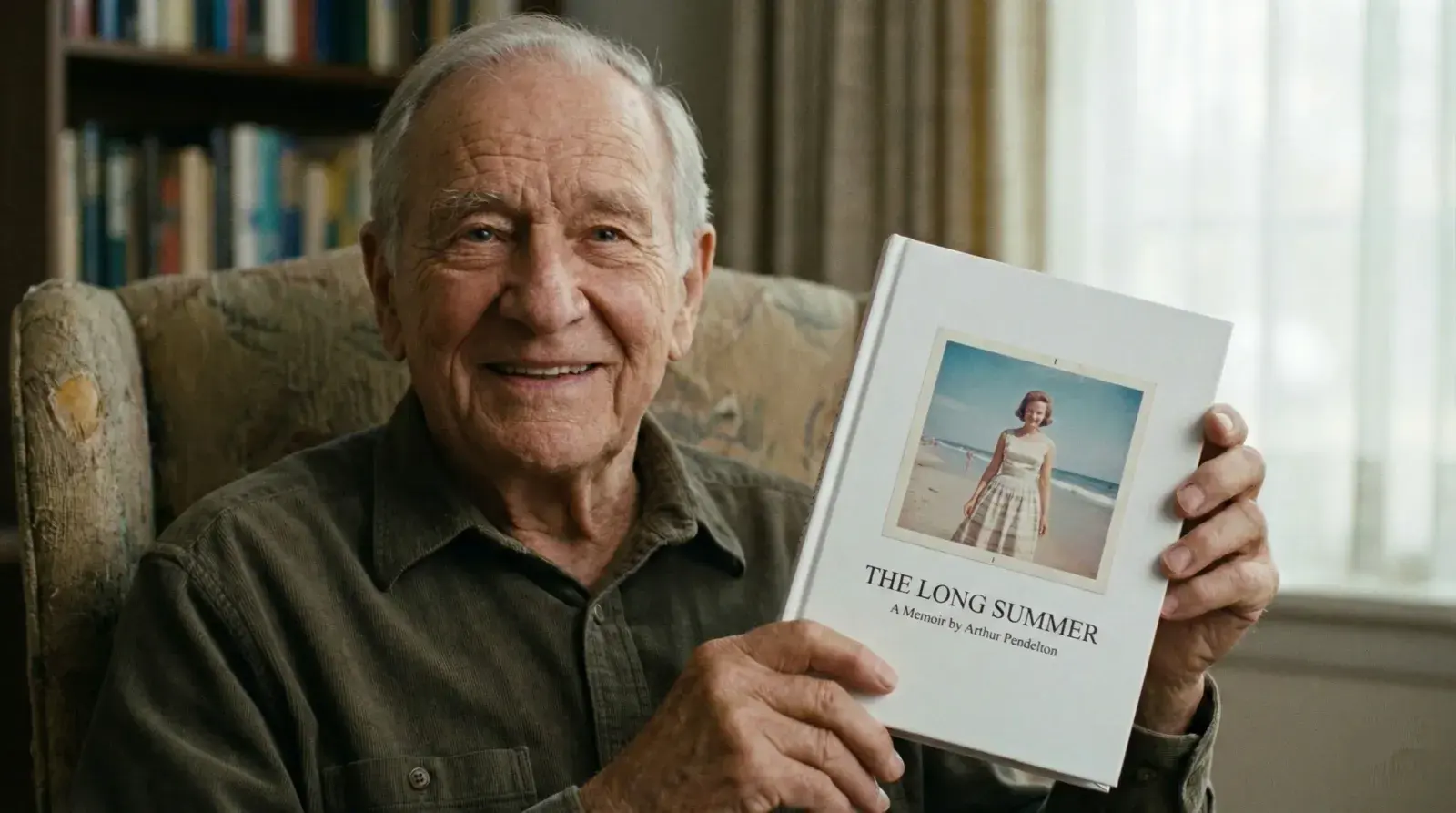
The Kindred Tales Life Story Gift Guide
Give your loved one a heartfelt, one-year guided memoir experience that helps them preserve their life story and turns their memories into a beautiful hardcover book. A deeply personal and meaningful gift for parents and grandparents.
Gift Guidance
5 Most Meaningful National Grandparent's Day Gifts 2025 (September 7th)
Celebrate National Grandparent's Day Sept 7, 2025 with gifts that matter. Top 5 meaningful ideas including Kindred Tales memoir books, photo frames & experience gifts.